Commonwealth Shared Scholarships 2027 - Fully Funded UK Master's
Fully funded Master scholarship in United Kingdom for Pakistan students 2026
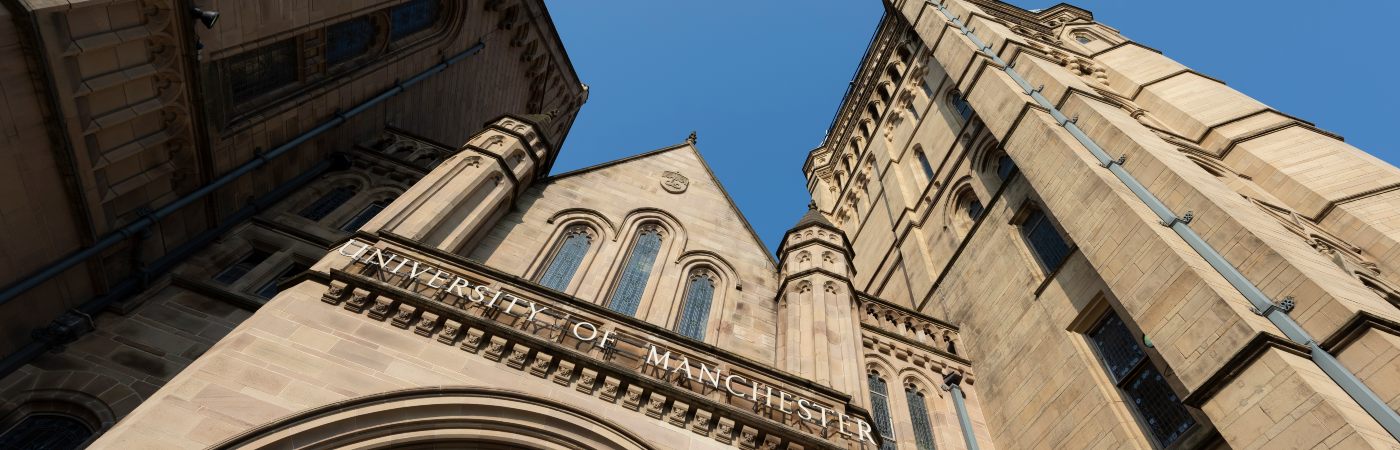
The CSC opens its 2027/28 Shared Scholarships on 10 November 2026 and closes on 8 December. Tuition, airfare and a stipend for one-year UK master's study.
Eligibility
- Citizen of, or refugee in, one of the 43 eligible Commonwealth countries (includes Pakistan, Bangladesh, India, Sri Lanka, Malaysia, Nigeria, Ghana, Kenya and South Africa)
- Permanently resident in that country at the time of application
- First degree of at least upper second-class (2:1) standard, or a 2:2 plus a relevant postgraduate qualification
- Not studied or worked for one year or more in a high-income country
- Unable to afford UK master's study without the award
- Applying to an approved master's course at a participating UK university for September/October 2027
- Ready to return home at the end of the award
Commonwealth Shared Scholarships are the one CSC route that a student applies to directly, without waiting for a national nominating agency to put their name forward. That single fact changes how you should prepare: there is no embassy shortlist to be chosen for, so the quality of your own form, your references and your choice of approved course carry almost all the weight.
What it covers
The award pays your full tuition at a participating UK university for a one-year taught master's, an approved return flight, a monthly living stipend, and a set of smaller allowances that applicants usually forget to budget for: a warm-clothing allowance where it applies, a thesis or dissertation grant, a study-travel grant, and a contribution towards the tuberculosis test that a UK visa requires. Single parents can also claim a child allowance. The stipend is higher for universities inside the London metropolitan area, which matters because London rents absorb far more of it than rents in Leeds, Sheffield or Glasgow.
The money comes from two sides. The UK university funds the living-cost component for the courses it has put forward, and the CSC pays the tuition and the rest. That shared funding model is why the scheme only works on an approved course list published for each intake, and why "any UK master's" is not an option.
Who can apply
You must be a citizen of, or have refugee status in, one of the 43 eligible Commonwealth countries, and you must be permanently resident there. Afghanistan is not on that list, so Afghan applicants should look at the Commonwealth PhD route only where a national nominating agency covers them, and otherwise at the country-specific awards on this site. For Pakistani, Bangladeshi, Indian, Sri Lankan, Malaysian, Nigerian, Ghanaian, Kenyan and South African readers, this is one of the strongest fully funded master's routes available this winter.
Eligibility self-check
Do I hold a first degree at 2:1 level or above, or a 2:2 plus a relevant postgraduate qualification? Have I spent a year or more studying or working in a high-income country? If yes, I am not eligible. Can my family pay a UK master's without this award? If yes, the CSC expects me to self-fund. Am I applying to a course that appears on the 2027/28 approved list, not a course I picked from a university prospectus? Can I be in the UK for September or October 2027 and return home when the award ends? Have I got two referees who will still be reachable in December?
A "no" to the first question is not automatically fatal, but it moves you into the small group that needs a postgraduate qualification to compensate. A "yes" to the second question is fatal, and it is the single most common reason strong applicants are filtered out before anyone reads their statement.
Deadline
The 2027/28 competition opens on Tuesday 10 November 2026 and closes at 16:00 GMT on Tuesday 8 December 2026. That is a four-week window, and it overlaps exactly with the period when the CSC Central system is busiest. Supporting documents must be uploaded by the same moment; a form submitted at 15:58 with a missing transcript is treated as incomplete.
Application materials checklist
Passport or national ID page showing your photograph, date of birth and nationality Full transcripts for every higher-education qualification, including any course still in progress Certified English translations for any document not already in English At least two signed references, in PDF, on institutional letterhead or from an institutional email address A personal statement and a plan of study written before you open the form A development impact statement that connects your course to a specific problem in your home country Your application reference number and passcode, saved somewhere you will find them in February
How to apply
Start with the approved course list for 2027/28, which the CSC publishes before the window opens. Apply to the university for admission as well: the scholarship is not an admission decision, and the university makes its own offer on its own timetable. Then register on CSC Central, complete the form, upload every document and submit. The system uses two-factor authentication, so have a phone or a second email account ready each time you log in.
https://www.cscuk.fcdo.gov.uk/scholarships/commonwealth-shared-scholarships
Common mistakes to avoid
Choosing a course first and checking eligibility afterwards. The approved list is the starting point, not a detail to confirm later. Writing a development impact statement about "giving back to my country" in general terms. The assessors want a named problem, a named institution or community, and a description of the role you expect to hold. Asking a professor for a reference in the last week of November. Uploading a transcript that stops at second year. Registering two accounts to "try again" - duplicate applications are visible.
Tips to win
Read the CSC's published selection criteria and answer them in order, in your own words, rather than writing one long essay that touches all of them vaguely. Where a question has a word limit, treat the limit as a target: a 300-word answer at 300 words reads as disciplined, and the form does not truncate for you. Before you submit, print the summary page - it is the only copy you get. If your first choice of course is competitive, apply to a second approved course at a different university; you may hold only one award, but you may be considered for more than one course.
Other scholarships worth reading
https://www.oeacnetwork.com/index.php?page=post&id=54
https://www.oeacnetwork.com/index.php?page=post&id=55
https://www.oeacnetwork.com/index.php?page=post&id=67
Talk to an OEAC advisor
If you are unsure whether your degree meets the 2:1 threshold or whether a course is on the approved list, send an OEAC advisor your transcript summary and your shortlist and we will check both before the window closes.
Last updated: 9 November 2026
Always confirm the deadline and eligibility on the official page before you apply. Scholarship dates change between rounds, and this listing is a summary — the provider's own page is the authoritative source. OEAC Network lists scholarships for free and is not an agent for any university or funding body.


