TCCM Erasmus Mundus 2027 — Fully Funded Computational Chemistry Master's
Fully funded Master scholarship in Spain for International students 2027

The Erasmus Mundus master in Theoretical Chemistry and Computational Modelling opened its 2027 call on 30 October 2026, with roughly 15 full scholarships across eight universities in five countries.
Eligibility
- Open to all nationalities, European and non-European
- Bachelor's in chemistry, physics or materials science, or a recognised equivalent
- Other science degrees accepted with levelling courses in up to two of seven subject areas
- English at about IELTS 6.5, TOEFL iBT 90 or Cambridge B2 First, or a medium-of-instruction letter
- No previous Erasmus Mundus joint master scholarship
- Official proof of country of residence
TCCM is a two-year Erasmus Mundus joint master in theoretical and computational chemistry, coordinated by the Universidad Autonoma de Madrid and taught across eight universities in Spain, France, Belgium, the Netherlands and Italy. The 2027 call opened on 30 October 2026, the application portal is live, and roughly fifteen fully funded scholarships are on offer for a September 2027 start. If you are a chemistry, physics or materials graduate who prefers modelling molecules to bench work, this is one of the strongest funded routes in Europe this month.
What it covers
Each scholarship covers registration fees and health insurance and pays a living allowance of EUR 1,400 per month for the full 24 months, which is the standard Erasmus Mundus rate and works out at EUR 33,600 across the programme. Students with a certified disability may additionally request support for related costs, and the consortium publishes a dedicated route for that.
You study in at least two of the partner countries and graduate with a joint or multiple degree. The fourth semester is the master's thesis, and the programme adds a data-science winter school and a business and science-management summer school, both of which are unusual for a chemistry master and useful if you intend to move into industry rather than a PhD.
Eligibility
The programme is open to all nationalities. You need a bachelor's in chemistry, physics or materials science, or a recognised equivalent. Graduates of other scientific disciplines can be admitted if they complete levelling courses, but the consortium requires certified knowledge of chemical bonding, atomic and molecular structure, general physics, mathematics, general physical chemistry, thermodynamics and kinetics, and spectroscopy, and applicants with gaps in more than two of those seven areas are not admitted.
English is required at roughly IELTS 6.5, TOEFL iBT 90 on the old scale, or Cambridge B2 First. If your degree was taught in English, a university letter confirming the medium of instruction is accepted instead of a test score, which is worth knowing if booking a test would cost you weeks. Applicants who have already held an Erasmus Mundus joint master scholarship cannot receive a second one.
Ask yourself: can I evidence five of the seven subject areas on a transcript, not just claim them? Do I have a Europass CV ready, since the consortium asks for that format specifically? Can I obtain an official document proving my country of residence, which many applicants only discover they need at the last minute? Am I applying to the right track, because the Spanish and French universities sit in one track and Groningen, Perugia and Trieste in another?
Deadline
The consortium runs a November-to-February window, with the 2027 scholarship round closing on 1 February 2027; the previous round closed on 2 February 2026, so confirm the date on the portal when you register. After the call closes, the International Pedagogical Committee scores and ranks every application, invites the strongest candidates to interview, and may contact referees where scores are tied. Results are communicated between March and April.
How to apply
Register on the TCCM application portal, create an account with an email address that will still work in two years, and complete the online form. Upload a Europass CV, passport, transcripts and degree records, English certificate or medium-of-instruction letter, motivation letter and any supporting documents. Add two referees, who are contacted only if the committee needs more information.
Documents to have ready
Europass CV in the official template; passport identity page; full transcripts and degree certificates, translated where necessary; English certificate or MOI letter; motivation letter; an official document proving residence; and two referee contacts. Keep the file names plain and avoid apostrophes and accents in the form fields, because the portal rejects special characters and silently fails to save.
Tips to win
The motivation letter carries more weight than applicants expect in a consortium programme, because the committee is deciding both whether to fund you and where to place you. Name the methods you want to learn, name the two or three research groups whose recent papers connect to them, and state which track you are choosing and why. A letter that could be sent to any chemistry master in Europe reads as unserious.
Choose your track before you write. The Spanish and French universities suit quantum chemistry and spectroscopy; Groningen, Perugia and Trieste lean toward molecular dynamics and simulation. Applying to the wrong track for your background is a self-inflicted rejection, and the form does not warn you.
If you are weak in one of the seven subject areas, address it in the letter rather than hoping the transcript speaks for itself. Say what course covered it, what grade you earned, and what you have done since to close the gap. The committee explicitly allows levelling, so a candid gap is survivable; a hidden one is not.
Common mistakes
The portal's handling of special characters causes more lost applications than any academic weakness: apostrophes and accents can prevent the form from saving, and applicants assume the site is down. A second mistake is applying with a three-year bachelor that does not meet the 180 ECTS threshold without checking equivalence. A third is naming referees who never respond, which matters when scores are tied. Finally, do not use a personal email address that you might lose access to; the account is used for all communication for two years.
https://www.emtccm.org/application/
https://www.oeacnetwork.com/index.php?page=post&id=118
https://www.oeacnetwork.com/index.php?page=post&id=117
https://www.oeacnetwork.com/index.php?page=post&id=51
If you are not sure whether your documents will clear the eligibility bar, send your transcripts and CV to an OEAC advisor and we will tell you honestly where you stand before you spend money on translations or test fees.
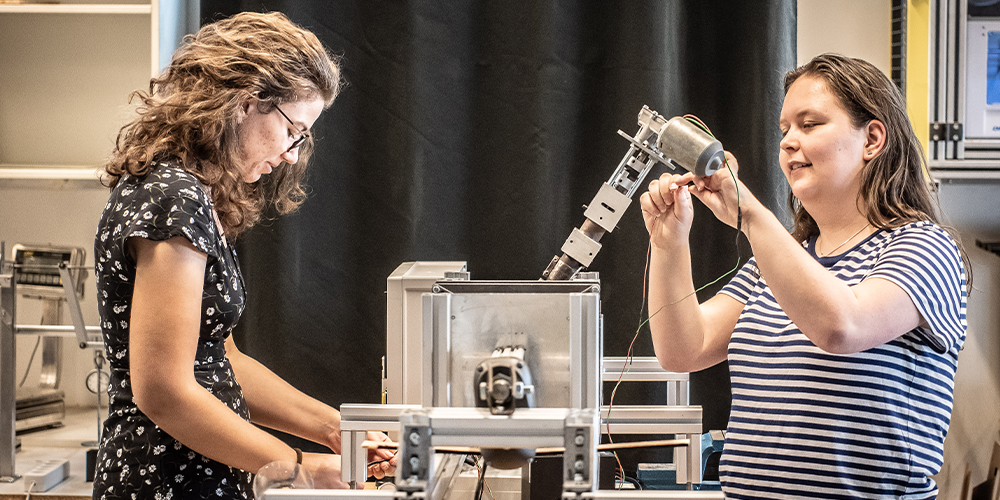
Photo: Wikimedia Commons, CC BY-SA.
Last updated: 10 November 2026
Always confirm the deadline and eligibility on the official page before you apply. Scholarship dates change between rounds, and this listing is a summary — the provider's own page is the authoritative source. OEAC Network lists scholarships for free and is not an agent for any university or funding body.